
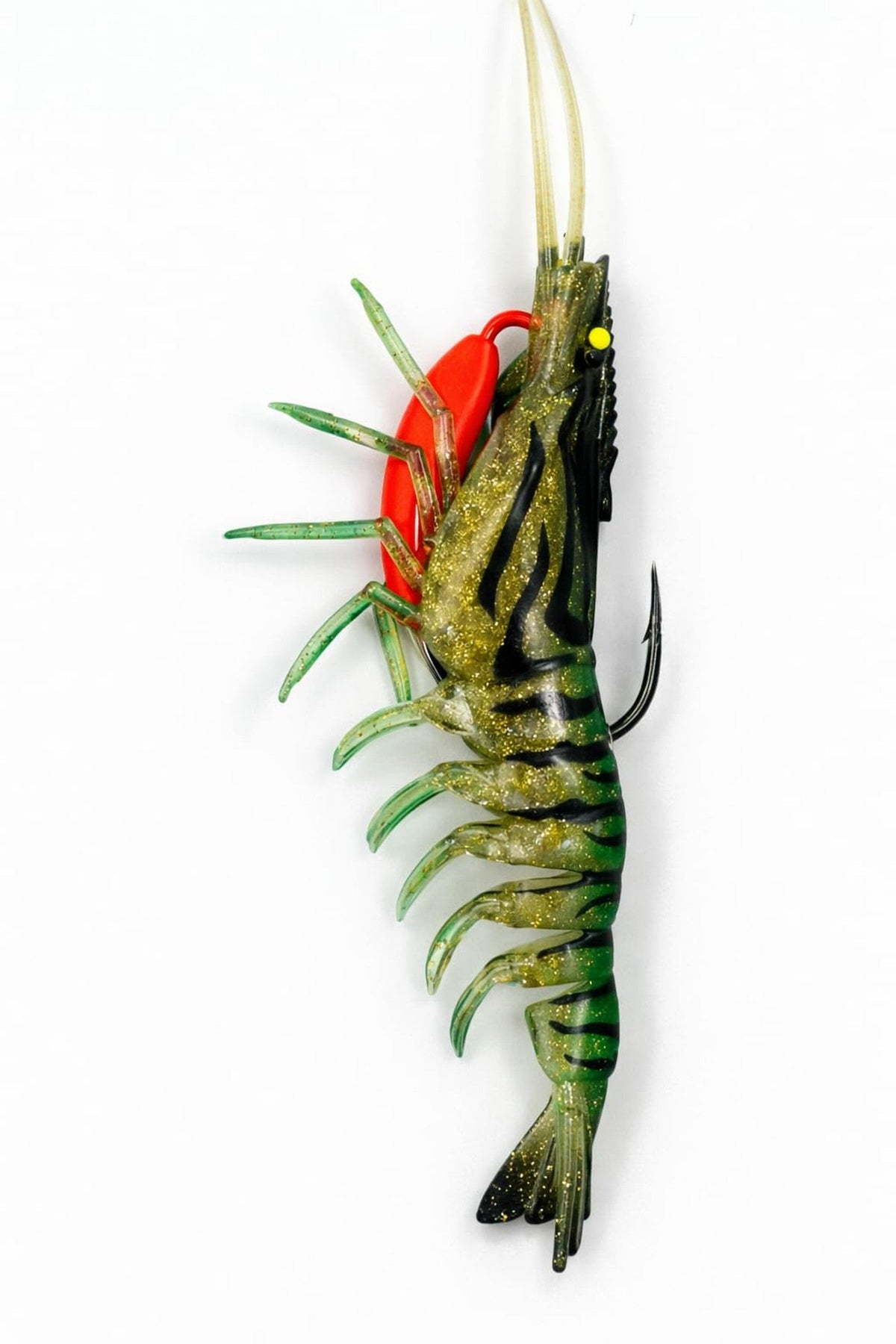
What should you use for kalanji in Kerala? Fish-shaped hard lures and suitable soft plastics, including shrimp profiles, are options to compare. Choose the running depth and weight for the current and structure you can reach. The best-looking lure in the shop is of little help if it swims above the water you need to cover.
Kalanji and barramundi: CMFRI records Kalanji and Narimeen as Malayalam names for Lates calcarifer in its marine-fish culture manual. Barramundi and Asian seabass refer to this species. Confirm the fish locally when a common name is used differently.
Can you catch barramundi in a river?
Yes, the species uses fresh, brackish and marine habitats. FAO’s barramundi profile describes this range and notes fish and crustaceans in the adult diet. That supports considering fish and prawn-shaped presentations; it does not establish that any particular Kerala stretch is holding fish today.
Think about whether you are on a freshwater reach, a tidal creek or near a river mouth. Those are different fishing situations even if the target is called kalanji in all three places.
Watch the flow from a safe position
Spend a few minutes looking for bait movement, an edge between faster and slower water, shade or accessible structure. Choose somewhere you can retrieve without crossing working nets or boat traffic. A bridge or harbour appearing in a video is not evidence that public fishing access is allowed.
Use tide predictions as planning information, then watch the actual flow where you stand. A backwater channel does not necessarily turn at the same moment as the nearest coastal tide station. Avoid universal rules such as “one hour before high tide always works”. Record what the water was doing when you saw activity.
Choose a lure by its job
| Presentation | Useful check |
|---|---|
| Diving minnow | Does its stated running depth suit the available water and snags? |
| Sinking fish-shaped lure | Can you control its descent before it reaches weed or rocks? |
| Shrimp or other soft plastic | Is it already rigged, and does its weight let you keep contact in this flow? |
Browse barramundi tackle and shrimp lures with these questions in mind. A category label is a starting point, not a guarantee that every item fits your rod or location.
Test close in before casting across the channel
With a short cast in visible water, check how the lure swims and what it does on a pause. Floating does not always mean surface-only; sinking does not specify a universal sink rate. Our lure-buoyancy guide explains the difference.
As a practice exercise, work the same accessible lane with a steady retrieve, then a controlled pause where snags allow. If the current leaves a large bow in the line, change the casting angle or suitable lure weight before simply winding faster. Change one thing so the comparison tells you something.
Check the leader and landing route
Inspect the working end of the line after rubbing structure or landing a fish. Replace damaged material and retie compromised knots. Choose line and drag for the complete outfit and cover; do not tighten the drag fully just because the target can be powerful.
Keep a suitable landing net within reach. A tall wall with no safe landing method is a poor choice of fishing position. After a saltwater or brackish-water trip, follow your reel’s manual and our reel-care checklist.
Common questions
Are shrimp lures better than minnows?
Neither wins everywhere. Compare the depth, action and ability to fish the chosen route. A ready-rigged shrimp and a diving minnow solve different presentation problems.
Is the same lure suitable for chemballi?
Some lure types overlap, but a structure-focused chemballi session may demand different positioning and tackle.
Which month guarantees kalanji?
No month does. Local conditions and access matter more than a statewide promise. Keep a short trip log of water clarity, flow, lure depth and any follows or strikes.
Ready to fish this setup?
Browse gear selected for Indian rivers, backwaters and coasts, or ask our team before ordering.


