
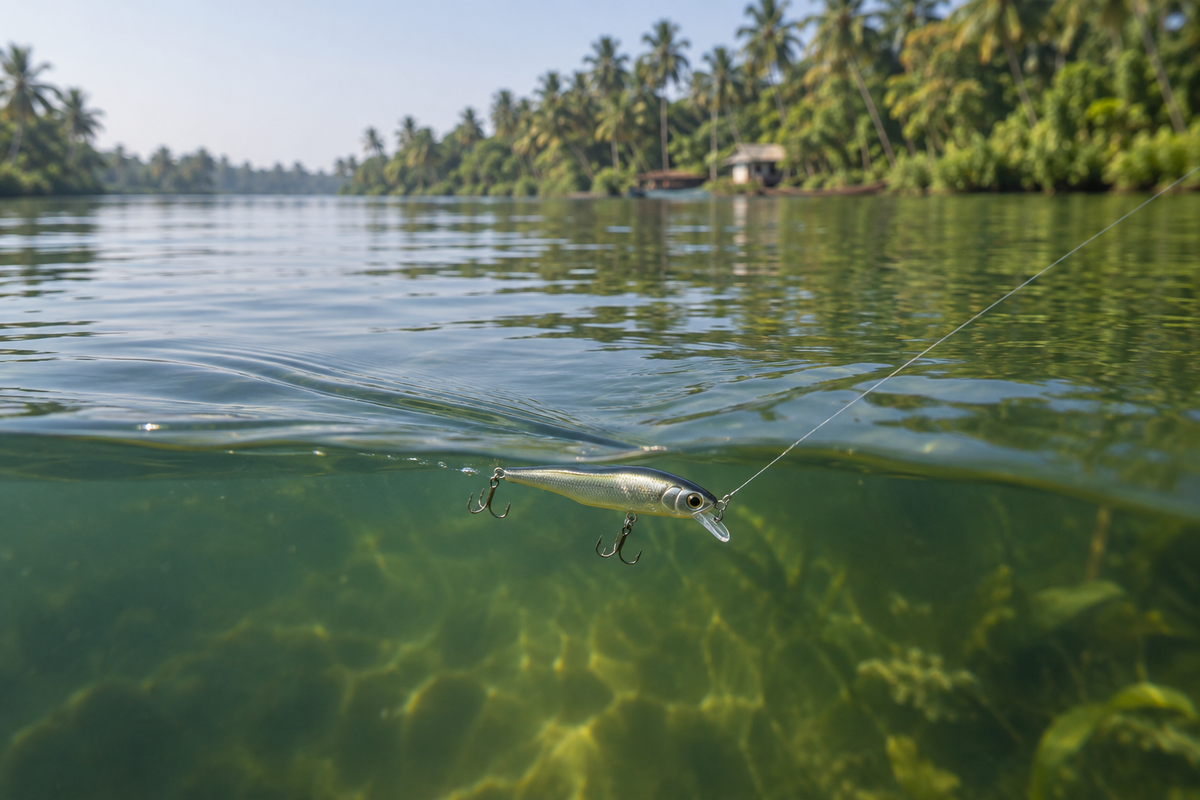
Quick answer: Start with a steady retrieve that keeps your lure working correctly. If fish do not respond, vary speed, add short twitches or try controlled hops with a suitable sinking lure. There is no single retrieve that works in every water.
Start where you can see the lure
Make a short cast into clear, safe water. Watch how the lure behaves as you wind. A surface lure, a diving hard bait and a weighted soft plastic need different presentations; use the lure maker’s instructions as your starting point.
Three retrieves to practise
- Steady: Keep the handle turning smoothly. Adjust speed so the lure swims as intended.
- Twitch: Add small rod-tip movements during the retrieve. Avoid exaggerated movements that make the lure lose its action.
- Hop: With a suitable sinking lure, let it descend, lift it, and control the next fall. Avoid bottom contact where snags make this impractical.
A repeatable practice session
Choose a safe casting lane. Try a short set of casts with one retrieve, then change only the speed or pause—not everything at once. Record the lure, approximate depth, retrieve and any follows or strikes. This is a learning exercise, not a catch guarantee.
Should I change colour or retrieve first?
Our suggested starting point is the retrieve: it costs nothing to test. If the lure is not reaching the water you want to cover, address depth and presentation before comparing colours.
Check casting space behind you and keep hooks away from people. Confirm access permission and local restrictions before fishing.
Explore lures and baits · More fishing guides
Editorial learning guide, not a report of a personally tested catch. Further reading: Shimano’s retrieve techniques. Apply techniques to your lure and local conditions.
Ready to fish this setup?
Browse gear selected for Indian rivers, backwaters and coasts, or ask our team before ordering.


